
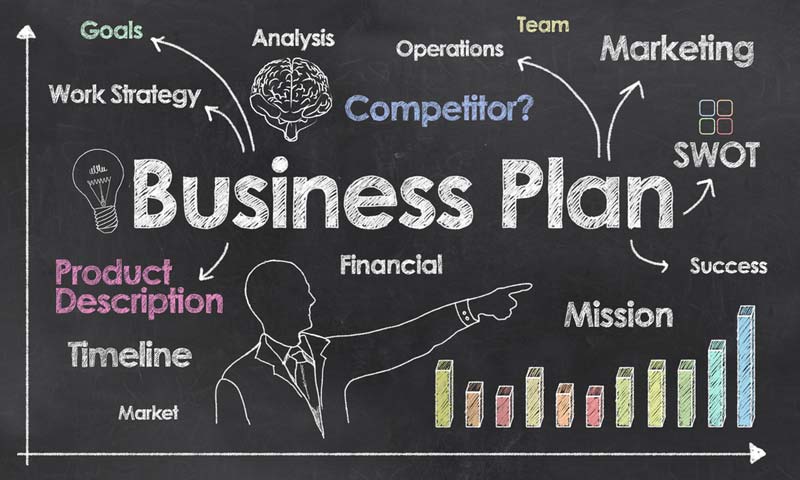
Business plans serve as strategic blueprints that explain what a business offers, why it exists, when it aims to achieve important milestones, and how it plans to operate successfully. The “what” focuses on the products or services being sold, the “why” defines the purpose and value the business brings, the “when” covers growth timelines and milestones, and the “how” outlines operations, marketing, and financial strategy.
There are several types of business plans, each designed for different goals and audiences. A traditional business plan is the most detailed and is often used when seeking investors, loans, or strategic partnerships. It typically includes an executive summary, company description, market analysis, organizational structure, product or service details, marketing strategy, funding needs, financial projections, and supporting documents. This format gives stakeholders a complete picture of the company’s potential and long-term viability.
A lean startup business plan is more flexible and works well for early-stage companies in fast-moving industries. Instead of lengthy detail, it focuses on core business essentials such as key partnerships, major activities, resources, customer segments, value proposition, cost structure, and revenue streams. This format allows startups to adapt quickly based on customer feedback and market shifts.
A one-page business plan simplifies everything into a concise overview. It usually includes the company’s vision, mission, target market, revenue model, operational strategy, and financial summary. This version is useful for quick presentations or internal planning because it highlights only the most critical information.
Other specialized plans serve unique purposes. Strategic business plans focus on long-term growth and future goals. Operational plans emphasize day-to-day processes, team responsibilities, and short-term objectives. Feasibility plans evaluate whether a business idea or expansion opportunity is realistic by analyzing market demand, finances, and risks. Growth plans are designed for scaling into new markets, hiring more employees, or launching additional products.
There are also social enterprise plans, which balance profitability with social impact, as well as alternatives like pitch decks, nonprofit plans, franchise plans, startup roadmaps, and project-based plans. Ultimately, choosing the right business plan depends on your goals, but every strong plan provides direction, clarity, and a roadmap for sustainable success.
Article contributed by
The AFE Editorial Team