
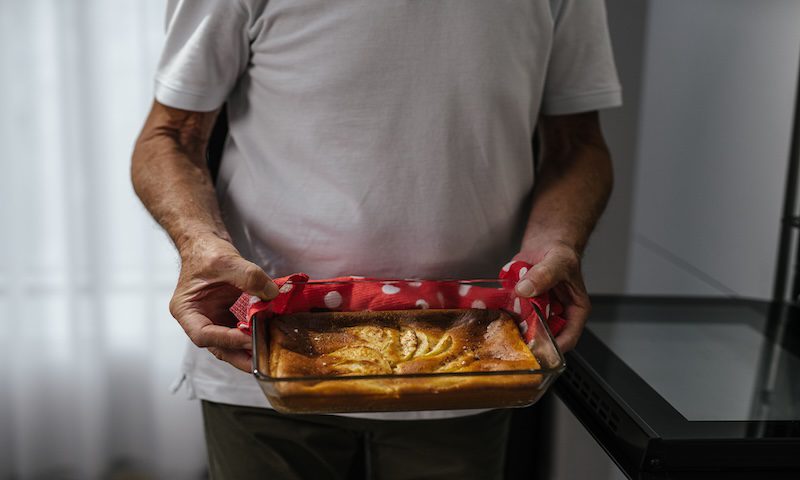
In the early 1900s, railroads had a dangerous problem. Signal lanterns used glass that could crack when hot glass met cold rain or snow, and a broken signal light could lead to an accident. Corning Glass Works, in upstate New York, solved it. By 1908 the company had developed a glass that could handle sudden temperature changes, and it sold that glass mainly to railroads.
It was a good business, but a narrow one. Corning wanted to find more uses for its tough new glass, and it assigned a newly hired physicist named Jesse Littleton to help look for them.
The answer came from his kitchen. Around 1914, his wife, Bessie Littleton, had a ceramic casserole dish crack in the oven after only a couple of uses. Frustrated, she asked whether Corning’s heat-resistant glass might work for baking. Jesse brought home the bottoms of two sawed-off glass battery jars, and Bessie baked a sponge cake in one.
It worked remarkably well. The cake baked evenly, came out of the dish easily and cooked faster than it did in metal or ceramic. Bessie kept going, testing different recipes and dish sizes and keeping notes on the results. Her experiments gave Corning something it couldn’t have gotten from the lab alone: proof that the glass worked in a real kitchen, cooking real food.
In 1915 Corning launched Pyrex, the first consumer cookware made from temperature-resistant glass. The first line included casserole dishes, pie plates, loaf pans and custard cups. By 1919, Pyrex ads showed more than 100 styles. A product designed to keep trains safe had become a fixture in American kitchens, and it remains one more than a century later.
The lesson: the biggest market for what you make may be one you’ve never sold to. Ask the people around you, especially people outside your industry, how they might use it. Then test it the way they would, in their real conditions, not just in yours. One person’s frustration with a cracked dish was worth more than years of searching inside the company.
Article contributed by
The AFE Editorial Team
