
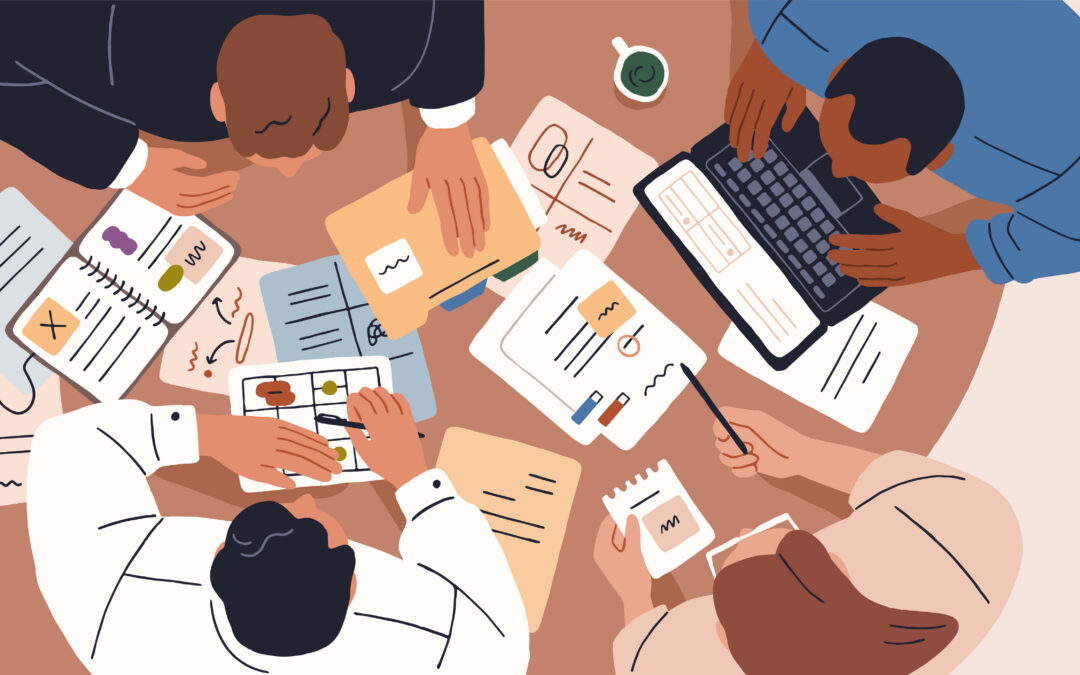
High-performing teams rarely get there by working longer hours. They get there by protecting the hours they already have — treating time as a resource to be managed with the same rigor as budget or headcount.
It starts with specificity. “Finish the project” isn’t a goal a team can act on; “finish market research by Friday at 3 p.m.” is. Vague goals invite vague effort, and the gap between the two is where most wasted time hides.
The Eisenhower Matrix — sorting tasks by urgency and importance — gives teams a shared language for triage. Not everything that feels urgent is actually important, and without a framework to separate the two, teams default to whoever is shouting loudest rather than what matters most.
Time-blocking protects focused work from the constant pull of task-switching. A calendar full of unstructured availability quietly becomes a calendar full of interruptions; blocking off real, uninterrupted stretches for deep work is one of the simplest ways to reclaim lost productivity.
Meetings deserve the same discipline. Keeping check-ins under fifteen minutes forces agendas to stay tight and conversations to stay purposeful, rather than expanding to fill whatever time was scheduled.
Finally, automation is one of the most underused time management tools available to small teams. Repetitive, low-judgment tasks — scheduling, data entry, routine follow-ups — are exactly the kind of work that technology can absorb, freeing people for the work that actually requires a human.
None of these strategies demand more hours or more hustle. They demand more intention about the hours a team already has — which is, in the end, the actual definition of productivity.
Article contributed by
The AFE Editorial Team
